

Patients often dismiss a chronic sore throat or recurring hoarseness as allergies or the flu. However, a chronic hoarse voice could be indicative of an underlying problem with the vocal folds (vocal cords). Vocal nodules are callous-like growths, usually appearing on the edges of the vocal folds and cause a hoarse vocal quality. Initially, these…

Adults who have experienced a stroke (referred to as a CVA-cerebrovascular accident) or head injury often present with deficits in speech intelligibility, language, cognitive (thinking) ability, and/or swallow function. After a stroke or head injury, the brain will slowly begin to heal from its injury. Many of the above-mentioned deficits may resolve completely or partially…

Adults can acquire swallowing problems (also called Dysphagia) for a variety of reasons including stroke, head injury, head or neck cancer, or degenerative disease processes. The severity of Dysphagia ranges from mild difficulties with particular textures of foods (such as meats or thin liquids) to severe/profound deficits that may require the patient to be fed…
Pediatricians often dismiss speech and language delays as “late talking” and may suggest that you “wait six months” before referring your child to a Speech Therapist. However, you as the parent are the expert on your child and his/her development. If you feel that “late talking” is a need that should be addressed, discuss the…
Pragmatics, or the use of social language, begins to develop at a very young age. Even young babies understand that when they babble, they take turns with Mommy and Daddy. Other social skills include: eye contact, joint attention, turn-taking, and nonverbal language such as gestures, body posture, and tone of voice. Children with autism, PDD,…

Traditionally, sign language is thought of as the method of communication for the deaf population. While this is true, sign language has a much broader use than only the deaf population. Sign language is often used to bridge communication skills when verbal (spoken) communication has not yet developed, is delayed, or is not possible. Sign…
Generally, children begin to say their first words around their first birthday. By age two, most children are combining two or more words into phrases. A delay occurs when language (vocabulary, length of sentence, grammar, etc.) develops more slowly than is normal, or fails to develop at all. In some cases, a child may begin…
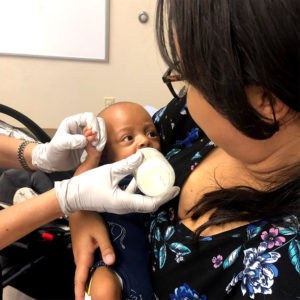
Many children present with difficulties feeding. This could be due to a prenatal (before birth) factor such as a genetic syndrome, premature delivery, or to factors after birth (failure to thrive, a stroke, head injury, or degenerative disease process). Severity of feeding difficulties range from mild (the child may have difficulty with a particular texture…
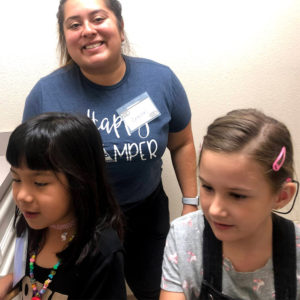
Children who are deaf or hard of hearing experience the world differently than hearing children. Some deaf children use sign language, some use speech, and some a combination (called total communication). Children who are deaf or hard of hearing benefit greatly from speech therapy focused on language development (in spoken English or sign language) and…
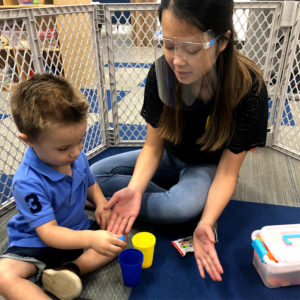
Autism is a term used to describe a group of symptoms in a child that include: a delay or total lack of development of spoken language, delayed/disordered social skills and peer relationships, and use of stereotypic behaviors repetitively. Autism is diagnosed by a psychologist/psychiatrist. Treatment should be a team approach. Members of the team may…